Plasma-Nitrieren vs. PVD-Beschichtung: Welche Oberflächenbehandlung passt zum Bauteil?
News Details
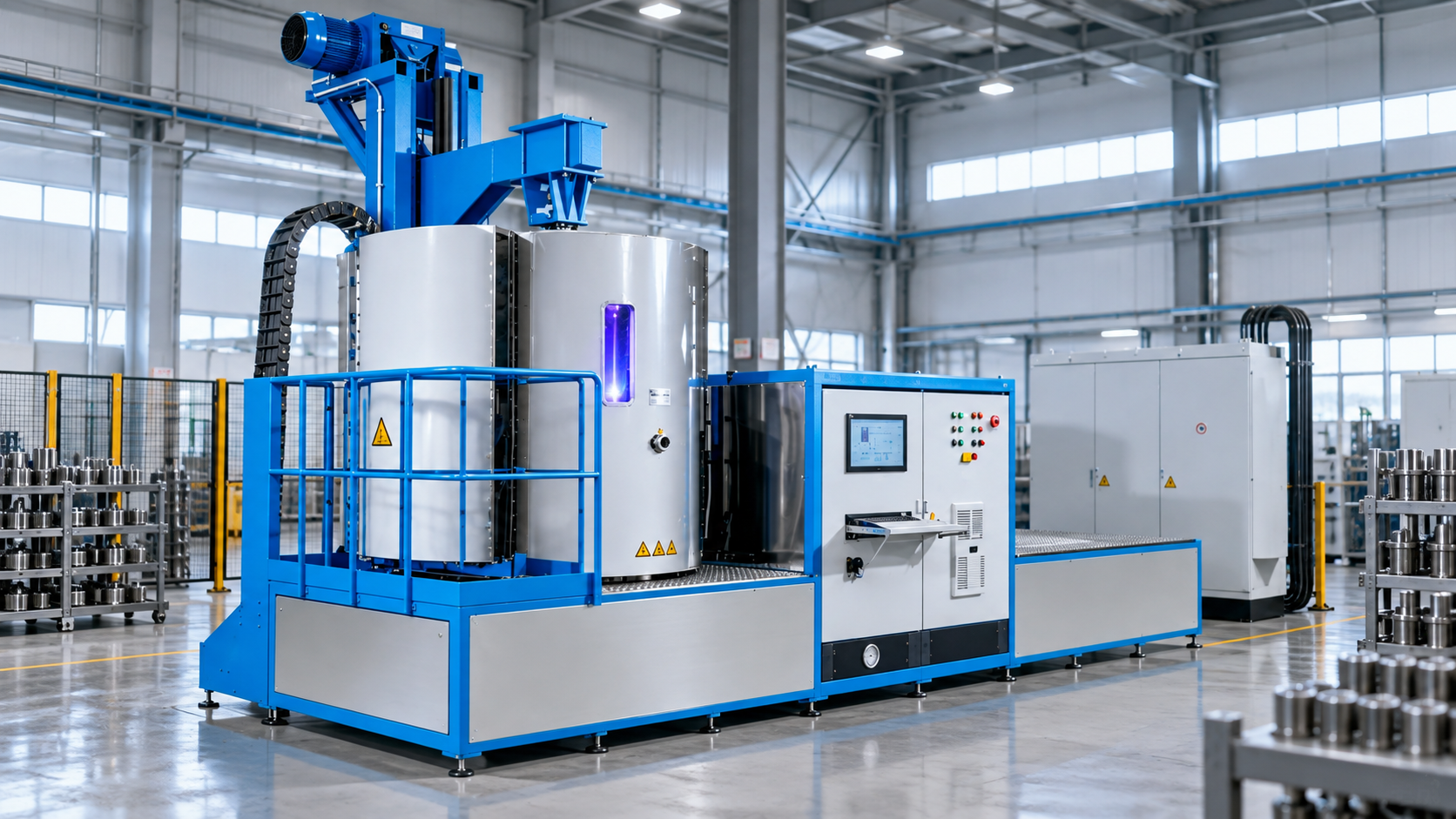
In modern manufacturing, the surface of a part often fails before the whole part does. It may wear, scratch, seize, corrode, or lose shape under heat and load. Because of this, choosing the right wear resistant surface treatment can extend part life, reduce downtime, and lower the real cost of production.
Two common choices are plasma nitriding and PVD coating. They can look similar from the outside because both improve the surface. However, they work in very different ways. So, when comparing plasma nitriding vs PVD coating, the better choice depends on the material, load, shape, tolerance, and working environment.
What Is Plasma Nitriding?
Plasma nitriding is a heat-based surface hardening process. In a vacuum chamber, nitrogen-rich plasma reacts with the metal surface. As a result, nitrogen diffuses into the part and forms a hard layer.
This layer is not a separate film. Instead, it becomes part of the metal surface. Therefore, plasma nitriding is often a good fit for steel parts that face heavy load, sliding wear, fatigue, and contact stress.
It is widely used for gears, shafts, molds, dies, screws, valves, and tooling parts. Also, because the process can be controlled with care, it can offer high hardness with low deformation compared with many traditional heat treatment methods.
What Is PVD Coating?
PVD means physical vapor deposition. In this process, coating material is vaporized in a vacuum and then deposited onto the part as a thin, dense film. A functional PVD coating can add high hardness, low friction, heat resistance, oxidation resistance, or special release properties.
Unlike plasma nitriding, PVD coating is a layer added on top of the part. Common coating types include TiN, CrN, TiAlN, DLC, and other advanced films. Each coating has a different color, hardness, friction level, and working range.
PVD is often used for cutting tools, punches, molds, medical parts, automotive parts, and precision components. It is especially useful when the part needs a hard surface but cannot accept deep heat treatment or major size change.
Plasma Nitriding vs PVD Coating: The Main Difference
The key difference is simple. Plasma nitriding changes the surface from inside the metal. PVD coating adds a thin high-performance film on the outside.
Because of this, plasma nitriding usually gives strong load support. It works well when the part carries high pressure or repeated impact. Meanwhile, PVD coating can offer very high surface hardness and low friction, but it needs a strong base material below it.
In many cases, the best result comes from using both. First, plasma nitriding builds a hard support layer. Then, PVD adds a functional top layer. This combined structure can improve wear resistance, reduce friction, and help the coating last longer.
When Should You Choose Plasma Nitriding?
Choose plasma nitriding when the part needs deeper surface hardening and better fatigue strength. It is a strong option for steel parts that face sliding, rolling, or repeated load.
It is also helpful when peeling risk must be reduced, because the hardened layer is formed within the surface rather than attached as a separate film. In addition, it can be a good choice for parts with complex shapes, inner holes, or working areas that need stable hardness.
However, plasma nitriding is not always the answer. It works best on suitable steels and alloys. Also, it may not provide the same low friction or special surface function as a PVD film.
When Should You Choose PVD Coating?
Choose PVD coating when the part needs a very hard, thin, and functional surface. It is a good fit for precision tools, molds, punches, cutting edges, forming parts, and components that need clean release or lower friction.
Because PVD films are thin, they are useful when size tolerance is tight. They can also improve surface performance without changing the whole part structure.
Still, PVD coating depends on the base material. If the base is too soft, the coating may crack or fail under heavy load. Therefore, material choice, pre-treatment, polishing, and coating selection all matter.
Quick Selection Guide
For heavy load and fatigue strength, plasma nitriding is usually the first choice.
For low friction, high surface hardness, and special surface function, PVD coating is often better.
For molds, dies, and tools under both high load and high wear, a plasma nitriding plus PVD solution may give the best balance.
For parts with strict dimensions, PVD coating may be easier to control.
For steel parts that need long service life under pressure, plasma nitriding can give stronger support.
How Juchuang Supports Better Surface Decisions
Juchuang ist bekannt als ein chinesischer Hersteller von kundenspezifischen Schweißmaschinen und Schweißsystemintegrator mit umfangreicher Erfahrung in Plasma-Technologie, Automatisierung und industriellen Produktionsanforderungen. Durch seine Plasma-Oberflächenbehandlungskapazität unterstützt Juchuang gepulstes Plasma-Nitrieren, funktionelle PVD-Beschichtungen und komplexe Oberflächenverstärkungslösungen.
Dies ist wichtig, weil eine Oberflächenbehandlung nicht allein nach Namen ausgewählt werden sollte. Sie sollte dem Bauteil, dem Material, dem Prozess und den tatsächlichen Betriebsbedingungen entsprechen. Zum Beispiel benötigen ein Formbauteil, eine Schweißvorrichtung, ein Umformwerkzeug und eine Präzisionswelle möglicherweise unterschiedliche Oberflächendesigns.
Mit der ingenieurtechnischen Unterstützung von Juchuang können Hersteller Plasma-Nitrieren und PVD-Beschichtung anhand von Belastung, Verschleißart, Temperatur, Korrosionsrisiko, Toleranz und Chargenanforderungen vergleichen. Dadurch ist die endgültige Lösung praxisnäher und stabiler in der Produktion.
Final Answer: Which One Fits Your Part?
Es gibt keinen einzigen Gewinner. Plasma-Nitrieren ist besser, wenn das Bauteil eine starke interne Oberflächenunterstützung benötigt. PVD-Beschichtung ist besser, wenn das Bauteil eine dünne, harte, reibungsarme funktionelle Oberfläche benötigt. Für anspruchsvolle Bauteile kann die Kombination beider zu einem stärkeren und langanhaltenderen Ergebnis führen.
Wenn das Ziel eine längere Lebensdauer, weniger Bauteilwechsel und eine stabilere Produktion ist, ist der beste Schritt zunächst die Untersuchung der tatsächlichen Betriebsbedingungen des Bauteils. Dann wird die Auswahl der richtigen Oberflächenbehandlung viel einfacher.


